
Vertigo is a sense that you or the room is spinning. Dizziness is a broader term for feeling unsteady, light-headed or off-balance.
These symptoms have several possible causes, and they need careful assessment before treatment.
Where it comes from
- The inner ear, such as benign paroxysmal positional vertigo (BPPV), where small crystals move in the balance canals
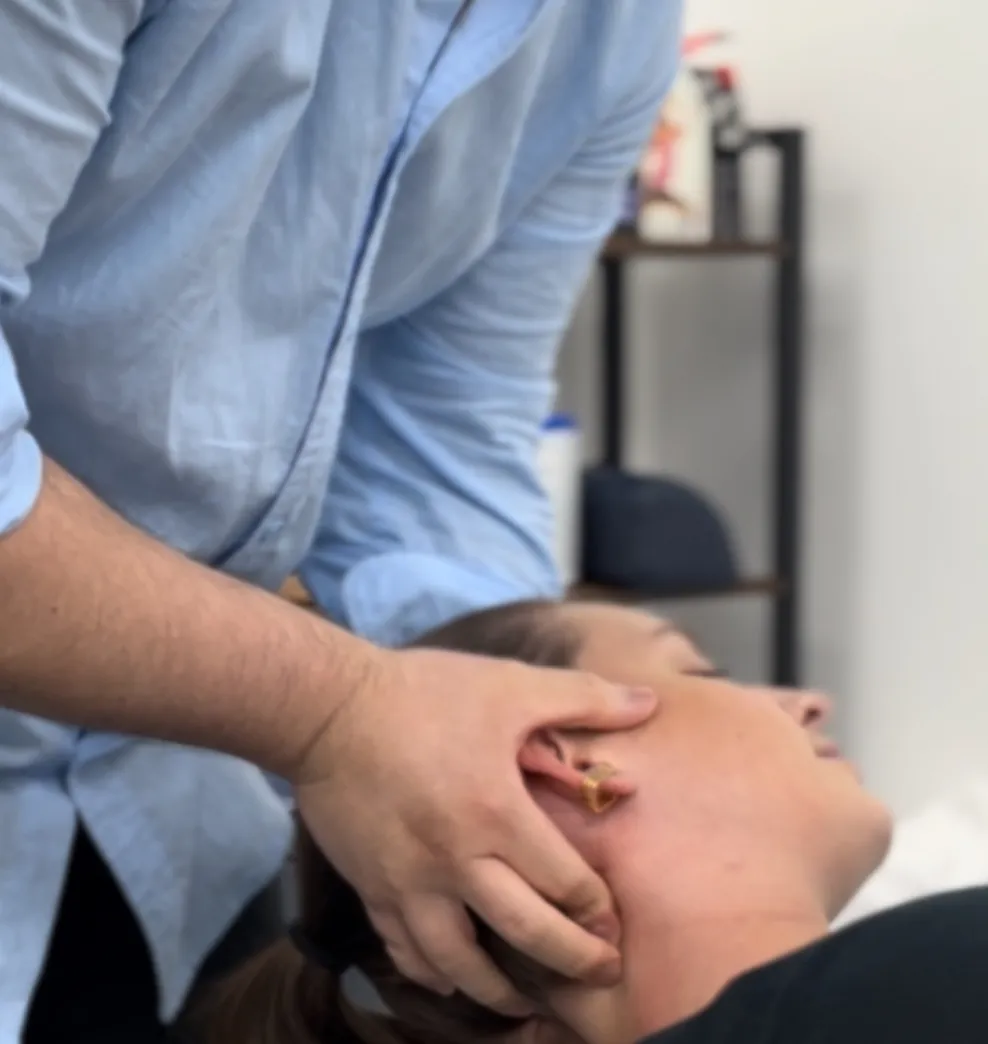
- The neck, where joint and muscle problems can disturb the signals that feed into balance (cervicogenic dizziness)
- Migraine-related dizziness
- Blood pressure, medications, dehydration or other medical causes
How we assess
We take a detailed history, check neck movement and the nerve and circulation findings that matter for safe treatment, and screen for signs that something else is going on. If we suspect an inner-ear problem or anything more serious, we refer you to your GP or an appropriate specialist.
What treatment involves
When the neck is contributing, gentle joint and soft tissue treatment and specific neck and balance exercises can help. BPPV is treated with specific repositioning manoeuvres, which we will refer you for if appropriate.
Dizziness and sport
Dizziness after a knock to the head or a heavy tackle should be treated as a possible concussion and assessed by a doctor before you return to play.